Tuesday, June 1, 2021

Some June Reads


I am not a book expert, and I often don’t have the patience or intellectual stamina to make it through some of “the classics,” but I love to read. Not only do I love to read, but I love to walk around bookstores (and avoid eye contact with the salesperson for fear they might speak to me), I love to hear what my friends are reading, and it’s pretty typical for a conversation to remind me of a book. And I can’t help but ask, “have you read ____?” I do my best to not sound like “oh, yes, I’m so sophisticated because – didn’t you know – I read,” but I just can’t help but want to talk about books.

I began this little substack (these posts will go out via email and also live on here) back in the new year in hopes that I’d write a lovely, magazine-length review every month at least. But between grad school and my brain’s way of being, that did not happen. A much more feasible task for me would be a digestible (both for myself and the reader) list of book recommendations. I could say that this is for you, reader, but in all honesty, it is for me, because book recommendations come out of me like word vomit and I need to just get it out of my system. Okay, it just being for me was a joke, I sincerely hope you get something out of this, even if it’s just the idea that reading could possibly be fun.

Hold Still by Sally Mann (2015)

Alright, alright, I KNOW what you’re thinking. “You’re a photographer so that’s why you like it.” (If you don’t know who Sally Mann is, she is one of the most important photographers of our time nbd. She also happens to be an amazing writer.) Hold Still is Mann’s memoir. But it is more than the tale of how she came to love photography and her resulting career. Mann uses Hold Still as a chance to explore memory, family, life’s nuances, and death. It was nominated for the National Book Award when it was released in 2015, and for good reason. Not only does she navigate these relatable and ever-relevant subjects so gracefully, but plenty of image-heavy description fills the pages. When I read this, I was transported to Mann’s porch in the beautiful hills of Virginia.

Godshot by Chelsea Bieker (2020)

A novel about cults, droughts, the mother-daughter relationship, and the power – for good or evil – of community. Honestly not my typical read as it has a bit of a post-apocalyptic feel, but I thoroughly enjoyed this book from beginning to end. Godshot follows the story of 14-year-old Lacey May. Lacey’s mother is an alcoholic and a chronically poor man-chooser, but Lacey still thinks she hung the moon. When Lacey’s mom skips town, though, the religious cult they’re apart of moves in on Lacey and she has no one to protect her from their bizarre and abusive scheme. Despite the weight of the topics this book deals with, Bieker still finds a way to integrate humor and sensitivity.

Sleepy Hollow Motor Inn by Molly Young (2021)

I love everything Molly Young writes, and I find many of my reads in her newsletter Read Like The Wind. Molly has not put out a book, she mostly writes for publications, but she has released two zines. (A zine is basically a short, self-published book.) Both zines are wonderful, but I particularly enjoyed this one that took me down a rabbit hole of an array of topics that I never previously thought could be connected. Sleepy Hollow Motor Inn explores a homicide, an old motel, the Titanic, a rare blood disorder, and two different pandemics.

Midnight in the Garden of Good and Evil by John Berendt (1994)

I read this right before COVID hit us in 2020. The setting of this book ­­– Savannah, Georgia – is part of what it makes it so enjoyable. The city itself is a character in this story; as I read it, I felt immersed in the sticky humidity and Spanish moss and Old South architecture that characterizes Savannah. Savannah is an interesting character, but each human character in this novel is even more interesting. We meet society ladies, country boys, a recluse, a drag queen, an antiques dealer, a con artist, and a voodoo “priestess.” Oh, and there’s a murder mystery, of course.

A Year in Provence by Peter Mayle (1989)

Peter Mayle’s writing is like floo powder (non-Harry Potter fans, floo powder magically transports you to wherever you’d like to go). Mayle worked in advertising in London for many years before retiring to the south of France with his wife. He lived there for many years and put his creativity to use by writing and publishing tons of stories about his culinary (and other) adventures in France. Mayle is hilarious and thoughtfully observant. He is self-deprecating while describing French culture in a simultaneously loving and critical eye. I actually think I gained weight when I read this book because I couldn’t stop ordering my poor husband to make me French food “like what Peter Mayle ate in the chapter I just read.”

Have you read any of these?? Do you have any recs for me?? I’d love to know so email me if so. 

Monday, February 1, 2021

Social Distance with Vesta Gul in "Death in Her Hands"


It’s February 2021, and most of us in the United States have grown accustomed to a lifestyle of isolation. I’ve been quarantining with my husband since March. We quarantined in Texas, and then moved to D.C. where we quarantined some more. It’s been lonely. You get it. Well, so does Vesta Gul. Sure, she may be a fictional character living in a fictional world, but she chose to quarantine before it was cool. Ottessa Mosfegh’s newest book Death in Her Hands was released in June 2020, and it serves as an indirect homage to the limitations of human sanity when in near-complete isolation.

We meet Vesta, our main character, after she’s lived in a cabin in the woods for nearly a year. She’s chosen a locale in the northeastern US, and she only leaves her house for daily walks with her dog Charlie and a trip into town once a week. At the start of the novel, Vesta finds a note on her walk with Charlie. It reads: “Her name was Magda. Nobody will ever know who killed her. It wasn’t me. Here is her dead body.” But there is no body to be found. Vesta takes the note home, and the resulting story follows her train of thought. Her mental spiral due to isolation and a new, perceived threat reminded me a bit of my own life experience this year.

This book is a thrilling joyride of both suspense and confusion. Shortly after the onset of the story, I began to realize how unreliable the narrator Vesta was. Though the events recounted to me by Vesta were fascinating – and kept the pages turning quickly – I found myself questioning every situation. Is Vesta imagining this, or is this real? Her descriptions of her response to the world grow more concerning as the book progresses. What starts out as anxiety due to a murderous note turns into several days without bathing or eating and perceiving threats in places they likely don’t exist. Mosfegh’s use of these details made me wonder if I’d ever find out the truth. With only Vesta’s voice as my source, I figured probably not, but I couldn’t stop reading anyways. Rather than a murder mystery, this book is the story of a woman reaching the end of her sanity. Though it is an exhilarating read, it also is an uncomfortable one.

Once Vesta perceives the threat of a murderer on the loose, everything changes. A perceived threat coupled with her isolation pushes her past the brink. Sound familiar? It felt like a hyperbolic metaphor for my experience in the COVID-19 pandemic. Isolated from friends and family? Check. Long walks with dog? Check. Terrified of dying? Check. A silent killer on the loose? Check. Mosfegh has a clear understanding of the inner thoughts of an anxious person, either because she has experienced anxiety herself or studied it thoroughly. As Vesta navigates her days, we follow her train of thought. Intrusive thoughts appear randomly and suddenly, reminding me of my own all-too-real daily encounters with anxiety.

I recently heard a writer named Molly Young speak on a podcast called Nerdette. She shared her theory that there are two types of people: there are people who read books for an escape. These people want to read the opposite of what they’re dealing with so they can detach. Then there are people who read books relevant to what they’re going through. If you are one of the latter, Death in Her Hands might be for you. Still, if anxiety is a frequent friend in your life, I would encourage you to approach this story with caution. There is no shame in taking a break from the story for a bit or putting it down altogether if you find it troubling.

Vesta is a misanthrope. She harshly judges every human she sees on the rare occasion she ventures into town, and she even judges her neighbors who she has never met but seen from afar. She disdains people for a variety of reasons: their appearance, their intelligence, their food choices at the grocery store, their shoes, the way they talk. “Bethsmane wasn’t for ladies. It was for people who hunted or drove trucks. It wasn’t an elegant place…The place wasn’t cultured by any measure. People ate fast food…Women mostly dressed in cheap synthetic materials. The blouses they wore were tie-dyed and glittery, and many women had tattoos on their arms,” she muses when thinking of the town she lives near. “She was…chubby. From behind she reminded me of a clapping seal, the way her buttocks flattened, her hands raised as if in prayer at her chest,” she remarks about a woman she encounters in a public bathroom.

Multiple users on Goodreads wrote that Vesta’s distaste for people is a turn-off for them in the book. “Word of warning: This woman hates fat people and it’s mentioned over and over and over again,” Goodreads user Michelle laments. “People don’t want to talk about how they relate to a character’s more unsavory qualities,” Mosfegh shared with the New York Times, “so they’re like, ‘God, she was really gross.’ Everybody’s so obsessed with being liked.” To me, Vesta’s harsh perceptions are meant to reflect the truth. That we all have ugly parts. We’re human. As a reader who deals with anxiety on a daily basis, I can unfortunately and admittedly see a bit of myself in Vesta. When I am at my lowest, and I’m just trying to get my groceries so I can get home and finally rest after a long day, the people around me are my metaphorical punching bags. Sure, the attacks are only in my mind and will forever stay there, but I still catch myself judging the occasional dawdling woman who won’t get out of my way as I try to navigate aisle number five. As the entirety of the book works as hyperbole, so does Vesta’s perception of humankind. I think Mosfegh’s portrayal of Vesta is meant to be a challenge to the reader: how much of Vesta resides in you?

With each passing year, I realize more and more how powerful the human brain is. It is a frightening thought at times: how little we understand about our brains, how mental illness can gradually and sneakily creep up on us, how careful we must be to take care of ourselves, our minds. The situations we choose to stay in, the people we choose to surround ourselves with, the places we choose to live, the food and drink we choose to consume. People always say that teenagers think they’re invincible. It’s true, at least in my experience. I’m still young, but I’m at the age now in which my mortality feels real, and I can see and feel the impact of even small daily choices. Another glass of wine? Another cancelled FaceTime (or in non-pandemic times, coffee date) with a friend because “I’m too tired”? Vesta had the chance to harness her anxiety and depression. She didn’t take it. She chose to burrow herself further into it. Death in Her Hands surprised me. I went in expecting a murder mystery and came out on the other side reminded of what could happen to me – or anyone – if I neglected myself long enough. 

Thursday, December 17, 2020

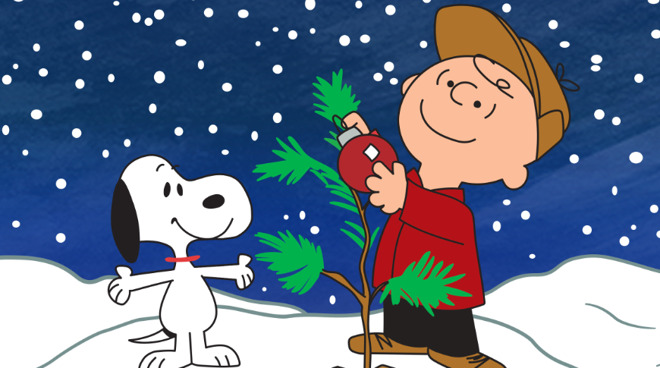
A Charlie Brown Christmas, the Balm that Heals Holiday (and Pandemic) Woes


I reached a point this year, around September, when I had run out of coping strategies. The pandemic had endured for several months, and I was back in school for the first time in a few years. Doing yoga in the hallway of my DC apartment just wasn’t doing it for me anymore. I needed some peace. I needed to be transported. I needed: Christmastime.

In 1965, Charles M. Schulz lovingly welcomed the world into his 30-minute special A Charlie Brown Christmas. For those who were familiar with Schulz’s then- and now-famous Peanuts comic strips, Charlie Brown and his crew were familiar territory. For those who aren’t familiar: Peanuts is a comic strip centered around an underdog-type character named Charlie Brown. Charlie, his dog Snoopy, and his friends navigate daily life together. Charlie’s best friend Linus is the philosophical type while Charlie’s little sister Sally is always hungry for attention. Peanuts had been around for 15 years by the time A Charlie Brown Christmas premiered, but never before on television. Kids and adults watched their favorite comic characters come to life. A Christmas miracle.

In September of 2020, I needed a Christmas miracle. Let’s be honest, we all need some kind of miracle. Charles M. Schulz saved my day once again on a random Sunday in September. I watch A Charlie Brown Christmas every December (and sometimes other months, too, if I need a pick-me-up). Every year, it comforts me with its piano-led soundtrack and beautifully illustrated setting. Both children and adults can enjoy A Charlie Brown Christmas. That’s what makes this television special, well, special. It inspires a chuckle or two (or three) as you notice the snarky quips that characters exchange with one another. “How old are these kids supposed to be?” I often wonder. A few minutes in, it’s clear that these kids don’t talk like kids, they talk like adults. Even better, they talk like adults who lack complete self-awareness. Schulz preserves the naivete of youth while allowing room for intelligent conversation. The result: comedy.

Our main character Charlie Brown is a kid, but he talks through the tough stuff in this television special. 

Why am I sad during the holidays? 

Shouldn’t I be happy? 

What is the true meaning of Christmas? 

Has even my dog (Snoopy, of course!) “gone commercial”? 

Charlie’s distress rings true to the adult viewers, while kid viewers can indulge themselves in ice skating scenes, cheerful music, fluffy snow, and Christmas play rehearsals. Snoopy swings Charlie Brown’s friends around the ice skating rink while Charlie Brown waxes poetic on the true meaning of Christmas. 

Whether you celebrate Christmas or Hannukah or Kwanza, the months of November and December are marked by holiday festivity. Charlie Brown’s own questioning of his lack of joy amidst so much excitement feels relatable, especially in a year like this one. But even on the “normal” years, many adults (and some kids, too) find the holiday season to be depressing, almost an emphasis on hard things like family issues, mental health issues, relationship issues. To be lonely when every person around you seems to be surrounded by people who love them? That’s something Charlie Brown understands.

This year, I recommend living vicariously through Charlie Brown and his castmates as we watch characters hold hands, sing, and dance together. Back in September, I sat in my apartment, hoping to immerse myself in the world of Charlie Brown. I wanted to feel like I wasn’t sitting in my apartment but was in fact joining Charlie Brown on his quest to discover the meaning of Christmas. I succeeded, to a degree. 

The visuals of A Charlie Brown Christmas draw me in. Vivid colors – bright pink, deep red, night sky blue – pull me through Charlie Brown’s neighborhood, and bonus: the neighborhood is covered in snow. Snoopy’s doghouse is decorated for Christmas, and I think of the Christmas decorations my mom would strategically place throughout my childhood home. Snow begins to fall on Charlie Brown, and I remember that time I was let out of school early because the snow was starting to build up on the roads and Texas doesn’t have snow plows. The pink stage curtain at the Christmas play rehearsal reminds me of my fifth-grade holiday pageant. The stars twinkle as Charlie Brown looks up to the night sky, and I remember looking out the window on Christmas Eve, wondering if Santa and the reindeer were on their way.

Charlie Brown is the butt of most of or perhaps all of the jokes in A Charlie Brown Christmas. Charlie’s “friends” are unpredictable. Sometimes they’re kind to him, and other times they exclude him or call him names. He’s called “block head,” “stupid,” and “hopeless,” among other things. The bullying is lighthearted, and humorous, but bullying nonetheless. Charlie again finds himself to be the most relatable character on the screen in this way. It is rare to make it through life without being on the receiving end of cruelty at least one or two times. Perhaps you’ve been bullied. Perhaps your family has alienated you or your friends have turned on you. We’ve all been there to varying degrees, and so has Charlie Brown. He’s there to sit down next to you and say, “me, too.”

A Charlie Brown Christmas has aged well. It is timeless, guaranteed to bring joy to little ones excited for the holidays as well as a smirk to even the most cynical of adults. Even if you’re a bit of a Scrooge, consider watching this special. Take the chance to detach from 2020 for just half an hour today.

Thinking of Summer

  My nieces Emery and Adelynn (face not shown) picking raspberries with my husband Grant last summer. I remember the specifically free feeli...